Metabolic Health
Explainer
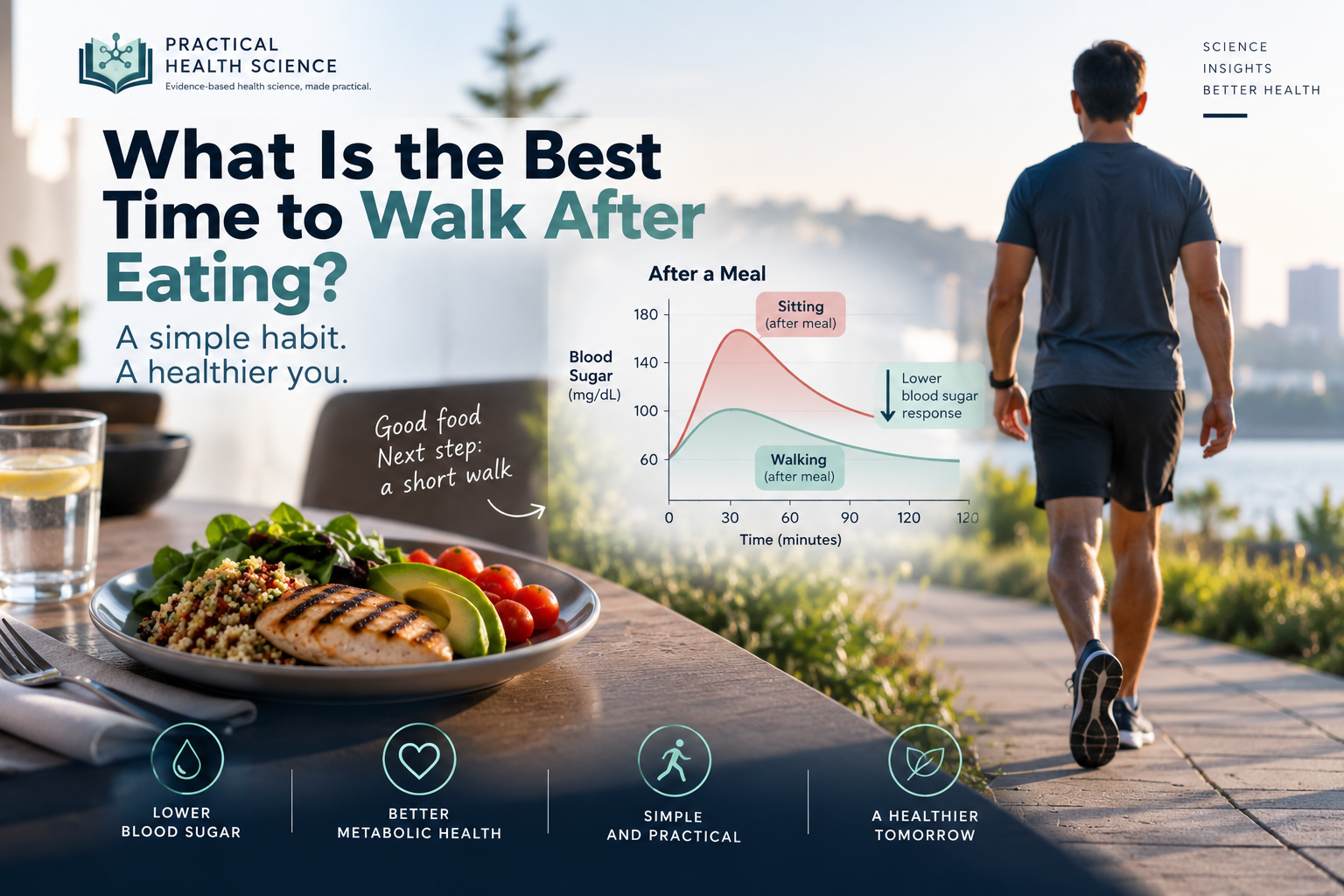
Walking after a meal can reduce the rise in blood sugar, but timing may matter. Research suggests that starting relatively soon after eating is useful, although there is no scientifically proven perfect minute.
Practical takeaway:
Walking after eating can reduce the postmeal rise in blood glucose.
The evidence does not identify one perfect starting minute.
Clinical studies have found benefits when walking begins anywhere from approximately 5 to 30 minutes after eating.
A practical approach is therefore simple:
Start relatively soon after the meal and walk for about 10 to 15 minutes.
The bigger metabolic mistake is probably not whether you start at minute 10 or minute 20.
It is finishing a meal and then remaining sedentary for the next several hours.
7 min read
· Sep 18, 2026
Magnesium is widely promoted as a sleep supplement, but there is no scientifically established dose that works best for insomnia. Recent trials provide some useful clues about how much has actually been tested.
Practical Health Science Editorial Team
9 min read
Sep 22, 2026
Creatine can support strength and lean mass when combined with resistance training, making it an interesting option during GLP 1 weight loss. But does it actually prevent muscle loss in people taking semaglutide or tirzepatide?
Practical Health Science Editorial Team
6 min read
Sep 16, 2026
GLP 1 medications can produce substantial weight loss, but some lean mass is usually lost along the way. Adequate protein and resistance training may help preserve muscle, although there is no single protein target that fits everyone.
Practical Health Science Editorial Team
7 min read
Sep 10, 2026
Magnesium glycinate and magnesium L-threonate are both promoted for better sleep, but they have not been directly compared in a clinical trial. Here is what the evidence for each form actually shows.
Practical Health Science Editorial Team
7 min read
Sep 9, 2026
Creatine is often claimed to raise DHT or testosterone, fueling concerns about hormonal effects and hair loss. But the evidence is far less clear cut. Here’s what controlled studies including newer research directly measuring DHT and hair follicle health actually show.
Practical Health Science Editorial Team
6 min read
Sep 9, 2026
Social media often claims that specific food cravings reveal specific nutrient deficiencies. The biology is more complicated. Here’s what the evidence says about cravings for sugar, salt, chocolate, and carbs.
Practical Health Science Editorial Team
7 min read
Sep 6, 2026
Long term Finnish studies have linked frequent sauna use with substantially lower cardiovascular and all cause mortality. Controlled trials also suggest benefits for blood pressure and vascular function. But no randomized trial has shown that sauna itself makes people live longer.
Practical Health Science Editorial Team
5 min read
Sep 4, 2026
Artificial and other non-nutritive sweeteners generally do not produce a meaningful acute insulin or glucose spike on their own. They may modestly help with weight control when they replace sugar, but long-term observational studies remain harder to interpret.
Practical Health Science Editorial Team
6 min read
Sep 4, 2026
Strength training is usually associated with building muscle, not treating high blood pressure. But randomized trials consistently show that regular resistance training can modestly reduce both systolic and diastolic blood pressure, especially in people who already have elevated blood pressure.
Practical Health Science Editorial Team
5 min read
Sep 4, 2026