
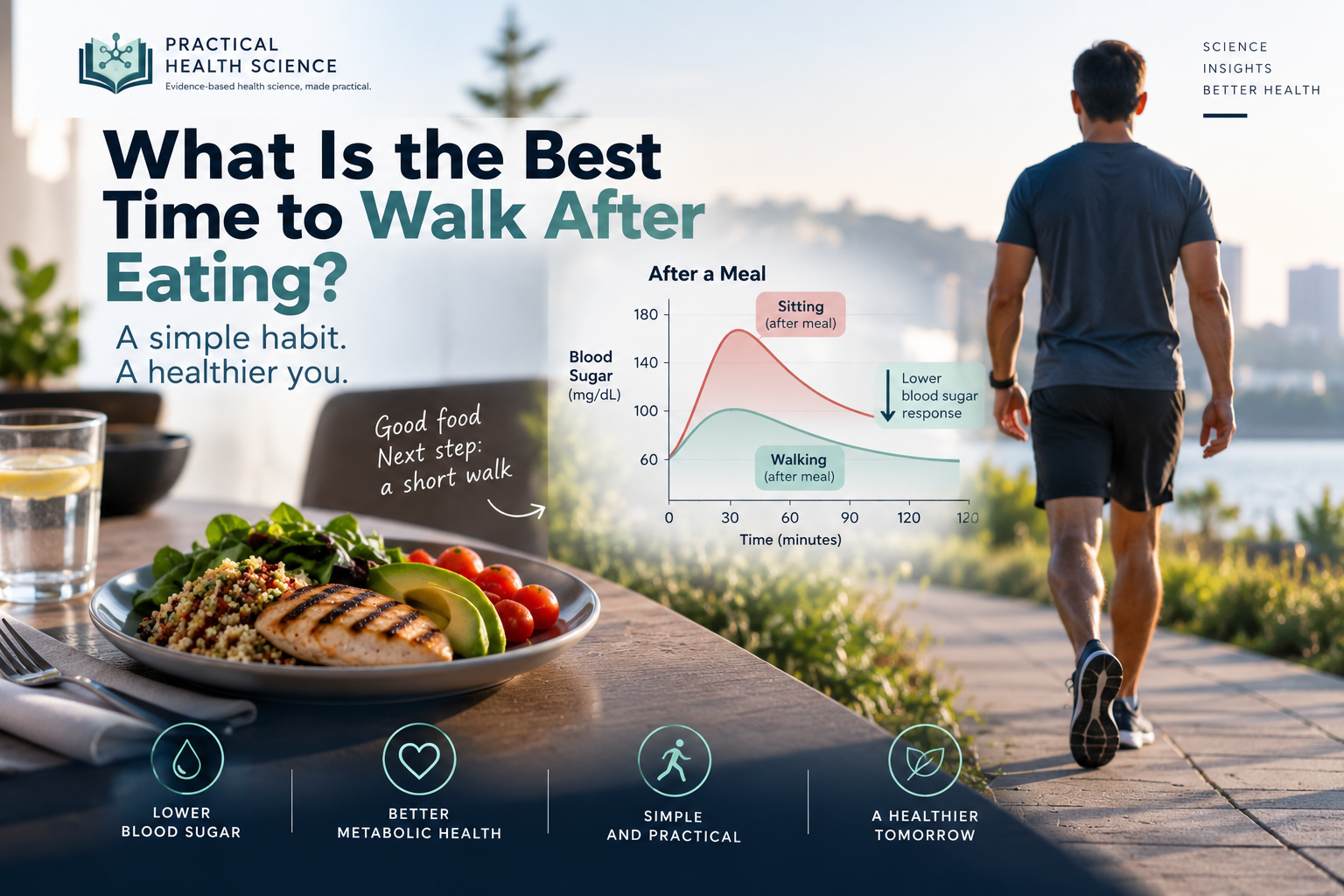
Why Does Timing Matter?
After a meal, carbohydrates are digested and glucose begins entering the bloodstream.
Blood glucose does not rise instantly to its peak. The response develops over time and varies according to the meal and the person eating it.
A carbohydrate rich meal may produce a larger glucose excursion than a meal containing less carbohydrate.
Insulin sensitivity, diabetes status, gastric emptying, medications, and physical activity can also change the shape of the glucose response.
Walking during this postmeal period gives active skeletal muscle another pathway for using circulating glucose.
This explains why walking several hours later may still be healthy exercise but may not have the same direct effect on the glucose excursion from that particular meal.
Should You Walk Immediately After Eating?
You do not necessarily need to wait.
One randomized crossover study in adults with type 2 diabetes instructed participants to begin a 10 minute walk within five minutes after finishing each main meal.
This approach produced lower postprandial glucose exposure than performing the same total 30 minutes of walking at an unspecified time during the day.
The overall postmeal glucose response was approximately 12 percent lower during the postmeal walking condition.
The difference was particularly noticeable after the evening meal.
This does not prove that five minutes is the ideal starting time.
It does show that walking soon after eating can work.
What About Waiting 30 Minutes?
That can work too.
A well known controlled study involving older adults at risk of impaired glucose tolerance used 15 minutes of moderate walking beginning 30 minutes after each meal.
Three postmeal walks significantly improved 24 hour glucose control.
They were also particularly effective at reducing the glucose response after dinner.
So the evidence does not support a narrow rule such as:
“Walking must begin exactly 10 minutes after eating.”
Both very early postmeal walking and walking around 30 minutes later have produced benefits in clinical studies.
Is It Better to Walk Before or After Eating?
If the specific goal is controlling the glucose rise from that meal, walking afterward appears particularly useful.
An earlier study in people with type 2 diabetes compared 20 minutes of walking before dinner with walking approximately 15 to 20 minutes after dinner.
Walking after the meal produced a more favorable immediate glucose response.
Other studies have similarly found that distributing activity after meals can outperform performing the same amount of exercise at another time of day for postprandial glucose control.
This does not mean premeal exercise is ineffective.
Regular exercise remains beneficial regardless of meal timing.
Postmeal walking simply provides a more targeted strategy for the glucose excursion generated by the meal you just ate.
How Long Should You Walk?
You do not necessarily need a long workout.
Research has demonstrated benefits using relatively short bouts.
A useful practical range is approximately 10 to 15 minutes after a meal.
In adults with type 2 diabetes, three 10 minute postmeal walks produced better postprandial glucose control than one 30 minute daily walk.
Another study showed benefits from three 15 minute postmeal walks.
This is important because the intervention is realistic.
A short walk after lunch or dinner may be easier to maintain than adding another formal exercise session to the day.
Does the Walk Need to Be Fast?
Not necessarily.
Many successful studies have used light to moderate walking.
The 2026 systematic review found that walking breaks were particularly effective for reducing postprandial glucose and insulin responses compared with prolonged sitting.
More intense exercise can also influence glucose metabolism, but intensity is not the only factor.
For a simple postmeal intervention, walking at a comfortable but purposeful pace is enough to create muscular contractions and increase energy demand.
The goal does not need to be exhaustion.
Consistency is probably more useful.
What If You Cannot Take a 10 Minute Walk?
Shorter movement breaks may still be useful.
The 2026 meta analysis examined 53 studies investigating interruptions to prolonged sitting and included 39 studies in quantitative analysis.
Regular activity breaks reduced postprandial glucose and insulin exposure.
Interestingly, more frequent movement appeared particularly useful.
Interrupting sitting every 15 to 20 minutes produced larger reductions in glucose response than less frequent interruptions in the subgroup analysis.
Walking breaks produced the strongest overall effects among the activity modes examined.
This research is not identical to taking one continuous walk after dinner, but it reinforces an important principle:
After eating, prolonged uninterrupted sitting is probably not the metabolically ideal option.